Pentecost 1 Shavuot
Shavuot (Pentecost):Your Destiny, and the power to fulfill it!
"ÔÇÿFrom the day after the Sabbath, the day you brought the sheaf of the waveoffering, count off seven full weeks [shavuot]. Count off fifty days up to theday after the seventh Sabbath and then present an offering of new grain to theLord." (Leviticus 23:15-16)
 Last year, in honor of Shavuot, school-children presentedIsraeli Prime Minister Benjamin Netanyahu with basketsof fruits and vegetables grown in Israel.
Let's Prepare ourselves for Shavuot!
Tomorrow, before the onset of Shabbat, Jewish people all over the worldwill adorn their houses and synagogues with flowers and greenery inanticipation of Shavuot (Feast of Weeks), which begins this Saturday night.
Shavuot marks the completion of the seven-week period called Counting theOmer, which occurs between Passover and Shavuot.
Indeed, on this very day almost 2000 years ago, when the Jewish peoplecelebrated the Feast of Shavuot (Weeks) in the Temple and the new grainoffering was presented to the Lord, God poured out the promised RuachHaKodesh (Holy Spirit) on the first Believers in Yeshua.
"Do not leave Jerusalem, but wait for the gift my Father promised, whichyou have heard me speak about. … But you will receive power when theHoly Spirit comes on you; and you will be my witnesses in Jerusalem, andin all Judea and Samaria, and to the ends of the earth." (Acts 1:4, 8)
Most Christians are more familiar with the Greek term representing the day ofShavuot–Pentecost, which means fiftieth (day).
 In the 1956 epic film, the Ten Commandments,Charlton Heston portrayed Moses, who leads theChildren of Israel from Egypt to the Promised Land.The film is considered one of the most famousmovies of all time.
Traditionally, Shavuot is regarded as the time when God gave the Torah toIsrael at Mount Sinai.
This was seven weeks after Israel's miraculous exodus from Egypt.
Do you remember the Charlton Heston movie where he plays Moses, stretchingforth his rod and the sea parts? Well, shortly after that scene Moses is up onMount Sinai for 40 days and 40 nights. He receives the Torah on Shavuot.
There at the foot of the mountain more than 3300 years ago, the Jewishpeople accepted the privilege and the responsibility of living as God's"set-apart people."
The Torah became the agreed upon standard of behavior and code ofconduct for both the native-born Israelite and the stranger who livedamidst them.
"The same laws and regulations will apply both to you and to the foreignerresiding among you." (Numbers 15:16)
Traditionally, if the Holy day of Pesach (Passover) is considered the birthof the nation of Israel, then the Holy Day of Shavuot is its Bar Mitzvah –the time when adolescents come of age and are considered adult enough to beresponsible for their moral and religious duties, as expressed in the Torah.
 Jewish boys and girls embrace the responsibility ofcarrying the Torah for the first time on the day of theirBar and Bat Mitzvah, when they officially become sonsand daughters of the Commandment.
Torah means instruction, and therefore, it’s God's written instructions toHis people.
Psalm 119 extols the beauty, blessing and liberty of living in accordance toGod's word in the Torah.
"Seven times a day I praise you for your righteous laws. Great peace havethose who love your Torah, and nothing can make them stumble."(Psalm 119: 164 -165)
The Bible promises that we will enjoy prosperity and success when wemeditate upon Torah and follow its ways.
"Keep this book of the Torah [instruction, law] always on your lips;meditate on it day and night, so that you may be careful to do everythingwritten in it. Then you will be prosperous and successful." (Joshua 1:8)
 A Bar Mitzvah boy reading from the Torah scroll
From Mount Sinai until now, there has always been a remnant of Jewishpeople who uphold the Torah, and every year on the holiday of Shavuot,the Jewish People renew their acceptance of this precious gift of God.
For that reason, it's a centuries old custom to stay awake all night studyingTorah on Erev Shavuot (which is this Saturday night) in anticipation ofreceiving the Torah the next morning.
This Sunday morning, therefore, Jewish men, women and children will be inthe synagogue listening to the Ten Commandments, while Christians celebratethe outpouring of the Holy Spirit.
 This year, the holidays of Shavuot and Pentecostcoincide, reflecting their origin on the same Jewishholiday. While Shavuot is counted 50 days from Passover,in the Church, Pentecost is counted 50 days from Easter.
Shavuot: the Sealing of a Covenant
The Torah is much more than just a list of rules.
God did not simply give the Law (Instruction) at Mount Sinai; He sealed acovenant with His people, very much the same way a groom and bride seala covenant when they say, "I do" (Jeremiah 31: 32).
In fact, one meaning of the Hebrew word Shavuot is "oaths."
Many aspects of the experience on Mount Sinai resembled a Jewish weddingceremony; for example, consider the following:
ÔÇó The cloud covering Mount Sinai shares a similarity to the Jewishwedding canopy called the chuppah, which covers the bride andgroom during the wedding ceremony;
ÔÇó The Ten Commandments resembles a ketubah, which is themarriage contract outlining privileges and responsibilities of each party;
ÔÇó The Sabbath is very much a sign of betrothal, similar to a wedding
ring; and
ÔÇó The Land of Israel is like a wedding gift.
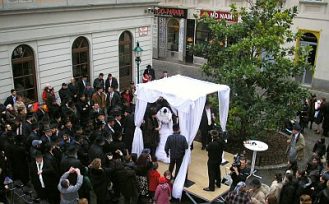 A Jewish couple marries under the chuppah: At Mount Sinai, the Lord broughtIsrael into covenant with Himself, under the canopy of the glory-cloud, whichis traditionally likened to the marriage canopy called the chuppah.
Shavuot in the New Covenant
Rav Shaul (the Apostle Paul), who was "a Hebrew of Hebrews" and blamelesswhen it came to Torah (Philippians 3: 4-6), said that if we could be maderighteous by the Torah, then Yeshua (Jesus) died in vain.
"I do not treat the grace of God as meaningless. For if keeping the Torahcould make us right with God, then there was no need for Messiah to die."(Galatians 2:21)
As Believers, we know that keeping the Torah is not how we are saved,but how we live because we are saved.
 The tradition of eating cheese on Shavuot is thought by some to date all theway back to the day Moses presented Israel with the Torah. After receivingthe Torah, the Israelites would have realized that previously slaughtered meatwas not kosher, and since they were hungry and butchering and cooking, freshmeat would have taken too long, they opted for cheese products.
As Jeremiah prophesied, the Torah is written in our mind and our heart bythe Ruach HaKodesh (Holy Spirit) under the New Covenant:
ÔÇÿThis is the covenant I will make with the people of Israel after thattime,' declares the Lord. ÔÇÿI will put my law in their minds and write iton their hearts. I will be their God, and they will be my people.'(Jeremiah 31:33)
God never intended that we merely know the Torah; He intended that ittransform us into His people, changing us from the inside out, and showing usthe path to loving God and man.
Love is the whole point of the Torah. Knowledge alone results in pride andlegalism.We need the Spirit of God to lead us into all truth, give us the ability tokeep God's word, and truly love.
 God’s Ruach HaKodesh (Holy Spirit) empowers us totruly love, stand in one spirit, and contend “as onenew man for the faith of the Gospel” (Philippians 1:27).
Being Empowered by the Holy Spirit on Shavuot
Yeshua (Jesus) instructed His disciples to wait in Jerusalem for the RuachHaKodesh (Holy Spirit), so that they could fulfill their destiny.
"When the day of Pentecost [Shavuot] came, they were all together in one place.Suddenly a sound like the blowing of a violent wind came from heaven and filledthe whole house where they were sitting. … All of them were filled with theHoly Spirit and began to speak in other tongues as the Spirit enabled them."(Acts 2:1 – 4)
 Pentecost, by Jean II Restout
In a wonderful prophetic fulfillment of Shavuot, the Ruach HaKodesh (HolySpirit) descended in power, changed them from the inside, and empowered themto "stand firm in one spirit" to reach Israel and the nations with the Gospelof Yeshua (Philippians 1:27).
This fulfilled Jeremiah’s prophecy:
"I will give them singleness of heart and action, so that they will always fearme for their own good and the good of their children after them." (Jeremiah 32:39)
"All the believers were one in heart and mind. No one claimed that any oftheir possessions was their own, but they shared everything they had." (Acts 4:32)
Each of us have been given a holy calling to be a shining light in the midst ofa dark and perverse generation.
This Shavuot, may our hearts be transformed as we receive a fresh infilling ofHoly Spirit (Ruach HaKodesh) who empowers us to fulfill our destinies!
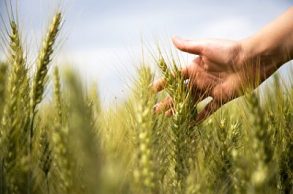 Yeshua told His disciples, “The harvest is plentiful, but the workers are few.Ask the Lord of the harvest, therefore, to send out workers into Hisharvest field.” (Luke 10: 2)
Yeshua's final words to us were: "Therefore go and make disciples of allnations." (Matthew 28:19)
The Jewish people do not know what took place on Shavuot (Pentecost), andthey do not know or understand how Yeshua fulfilled the Messianic prophecies.