The Power Of Blessing In Your Life Parsha Balak
Unleash the power of blessing in your life: Parsha Balak is this week’s Torah Study
 A Torah scrollShabbat Shalom from Jerusalem John,
In a few hours from now it will Shabbat over here in the Holy Land.
Welcome to our study of Parsha Balak (Destroyer). This weekly Torah portionwill be read in every synagogue around the world during this week’s Shabbat(Saturday) morning service.Please read along with us. We know you will be blessed!BALAK (Destroyer)Numbers 22:2–25:9; Micah 5:6–6:8; Romans 11:25–32“But God said to Balaam, ‘Do not go with them. You must not put a curse onthose people, because they are blessed.'” (Numbers 22: 12)In last week’s Parsha Chukat, God taught Moses the laws of the Red Heifer,whose ashes were to be used for the purification of the Israelites.In this week’s Parsha, God uses a donkey to reprimand Balaam, whom Balak,the king of Moab has hired to curse Israel. The Western (Wailing) Wall plaza in the Old City of JerusalemThe Plans of Balak Thwarted by the Plans of God“Now Balak son of Zippor saw all that Israel had done to the Amorites… SoBalak son of Zippor, who was king of Moab at that time, sent messengers tosummon Balaam son of Beor.” (Numbers 22: 2-5)In this week’s Torah portion, a foreign sorcerer named Balaam is offeredincredible riches to curse Israel. Instead of cursing, however, under thecompulsion of the Spirit of God, he blesses Israel.
This is a testimony to the unique character of the nation of Israel since he waswas speaking contrary to his own intention and self-interest. Surprisingly enough, Balaam's blessing over Israel has now become the openingprayer of every morning service in synagogues."Ma tovu ohalecha Yaakov mishkenotechah Yisrael"-"How beautiful areyour tents, Jacob, your dwelling places, Israel." (Numbers 24:5) The clear message of Parsha Balak is that all attempts on the part of man tofoil the purposes of God in regards to His people are utterly futile.
Despite repeated attempts throughout history to destroy the Jewish People,every attempt has failed. Moreover, God's Word promises that a glorious futureawaits Israel.
 Every Torah scroll is meticulously handwritten and a masterpiece in theirown right.
Balaam: Evil for Hire
“Now come and put a curse on these people, because they are too powerful forme. Perhaps then I will be able to defeat them and drive them out of theland. For I know that whoever you bless is blessed, and whoever you curse iscursed.” (Numbers 22:6)
Because of the Israelites’ victory over the Amorites, Balak, the king of Moab,dreaded Israel. In hiring Balaam to curse Israel, he thought that he hadcome up with a winning solution for a losing situation.
Balak hired Balaam because he was a well-known soothsayer whose curse wasfeared throughout the East.
He is a study in contradictions, making him somewhat of a compelling, enigmaticcharacter. On the one hand, he’s a prophet and a self-proclaimed worshiper ofthe one true God. On the other, he is a heathen sorcerer and a willingaccomplice in plotting the destruction of God’s people.
As such, he fully demonstrates the complexity of humankind, which can befickle and changeable in loyalty.
It’s no wonder that the Bible says that the " heart is deceitful above allthings and beyond cure…" (Jeremiah 17:9), and that it’s better to place ourtrust in the Lord, who is absolutely trustworthy, than to place our confidencein princes (Psalm 118:8-9).
The Prophet Balaam and the Ass, by Rembrandt
For All the Riches in the Palace
"Even if Balak gave me all the silver and gold in his palace, I could not doanything great or small to go beyond the command of the Lord my God.”(Numbers 22: 18)
Balak promised Balaam heaps of riches and honor if he would comply withthe King's request to curse Israel.
Nevertheless, Balaam tells Balak that if he gave him a palace full of silver andgold, he still could not go beyond the word of the Lord (Numbers 22:18).
If only more people possessed a mindset to mirror God’s Word in their speechand attitudes about God's people, Israel.
Instead, people like King Balak disregard the Word of God that states theIsraelites are a people to be blessed, and choose to curse them instead.
 Israelis enjoying a break on a summer afternoon.
God had made His will very clear to Balaam. He did not want him to gowith Balak’s men and did not permit him to curse Israel.
Why then, did Balaam ask the men to stay the night?
Was the temptation of riches and fame too great for Balaam to give up so easily?Did he hope that maybe God would give in, or change His position on the matter?
Too often we are like Balaam. When we don't like the answer to our prayer,we hang around a bit longer, hoping that God might see things from our perspective.
But God did come again to Balaam, this time in the night. He told him that hecould go with the men but he could only do what God told him to do(Numbers 22:20).
Curiously, when Balaam rose up in the morning and went with the princes ofMoab, God's anger was kindled against him. Why? Was it fair for God tobe angry with Balaam after giving him permission to go?
God is a discerner of the thoughts and intents of our hearts. He saw thedouble-mindedness of Balaam, and knew that despite what the man said, hewas still hoping that things would turn around, and he would be able to curseIsrael for his own personal gain.

Balaam and the Angel, by Gustav Jaeger
Balaam was greedy for riches; he erred in running after profit. His sin is is linked with that of Cain, who murdered his brother, and Korah, who led therebellion against Moses.
"Woe to them! They have taken the way of Cain; they have rushed for profitinto Balaam’s error; they have been destroyed in Korah’s rebellion." (Jude 1:11)
Balaam knew that it wasn't God's will for him to go with Balak's shlichim(emissaries), but he went anyways, likely hoping to return a rich man.
Likewise, we must make sure that the intentions of our hearts are pure,even for those things which are permissible.
Beware of greed. Even when God prospers and blesses us, we must not allowthe desire for riches to consume us or become the root of our behavior and actions.
"For the love of money is a root of all kinds of evil. Some people, eager formoney, have wandered from the faith and pierced themselves with many griefs.”(1 Timothy 6:10)
 Donkeys are thought to have been domesticated around 3000 BC inMesopotamia or Egypt. This Egyptian painting of a donkey is dated circa1298-1235 BC.
The Donkey Speaks to Balaam
“I have come here to oppose you because your path is a reckless one before me.The donkey saw me and turned away from me these three times. If it had notturned away, I would certainly have killed you by now, but I would have sparedit.” (Numbers 22: 32 – 33)
Quite often, we blame ÔÇÿthe devil' for frustrating our plans and standing inthe way of our chosen path.
Sometimes, however, our plans are amiss, and God may send a messenger tokeep us from following a path that leads to our own destruction.
In Balaam's case, he had two messengers: his donkey and an angel.Upon seeing an angel standing with his sword drawn, ready to strike Balaam, thedonkey turned aside from the path and went into the field.
In his anger, Balaam struck his donkey. Three times the donkey attempted toavoid the angel and three times Balaam struck his donkey.
Then the Lord opened the donkey's mouth to reprove Balaam, andBalaam's eyes were opened, so that he too saw the angel of the Lord.
The angel explained to Balaam that his path was reckless, and had it not beenfor the donkey, he would be dead.
When everything seems to block our way and frustration overtakes us, weshould ask ourselves, "Is this really the enemy or could it be possible that myway is contrary to the Lord's?"
 The Via Dolorosa (Way of Suffering) inJerusalem is considered by many to be part ofthe path that Yeshua walked carrying theexecution stake.
After this encounter, when Balaam met in person with Balak, he told theking that he had no power to speak anything except the message Godgave to him to speak.Furthermore, God gave Balak a prophetic message through Balaam in whichIsrael was blessed (Numbers 23: 5-12).
"How can I curse those whom God has not cursed? How can Idenounce those whom the Lord has not denounced?" (Numbers 23:8)
When Balak finally resigns himself to the fact that Balaam will not curseIsrael, he tells him to at least refrain from blessing them:
"Neither curse them at all nor bless them at all." (Numbers 23:25)
Sadly, today some people take this stance with regards to Israel. They knowenough to realize that they had better not be cursing God's people, butthey don’t want to go so far as to actively bless Israel either. And so,they sit on the fence, neither cursing, nor blessing Israel.
Balaam, however, realized that "it pleased the Lord to bless Israel.(Numbers 24:1)” Moreover, when he looked out over the Israelites, theSpirit of God came upon him (Numbers 24:2).
Who among us does not want to please the Lord and be filled with His Spirit?Perhaps we need to get down off that fence and ask “how can I bless Israel?"
 A Jewish man prays at the Western (Wailing) Wall.
Speaking with the Intention of Blessing
"The tongue has the power of life and death, and those who love it will eat itsfruit." (Proverbs 18:21)
Although today, we tend to minimize the power of the words we speak,during the time of Moses and Balaam, the entire ancient world believed in thevery real power of blessings and curses.
In fact, the Tanakh (Hebrew Bible) clearly says that the tongue has the powerof life and death (Proverbs 18:21).
This is why the patriarchal blessing was so significant in ancient days, andwhy, even today, we must be careful to speak blessing and not cursing overour loved ones, especially our children.
Our words are so powerful!
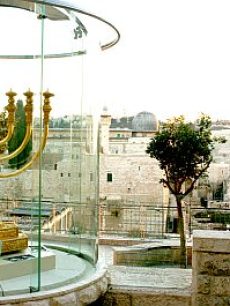
 The Western (Wailing) Wall, which is a retaining wall for the TempleMountplatform, is the last vestige of the Temple that once stood on the TempleMount. Since the Temple is the place that God chose as His dwellingplace, the site is considered holy, and for centuries, it has been a site forJewish prayer.
When the Israelites complained in the wilderness and said that surely they were
going to die in the wilderness-speaking through fear rather faith, God basicallysaid, "Okay, you'll have what you have said."
Remember, God brought the universe into existence through speaking.
And since we are created in the image of God, our words also have the powerto create and shape reality.
Pause and think about this. Imagine if your life was the sum total of thethings that you or other people had spoken. Or your children’s lives.
If we were absolutely certain that this was the case, we might be morecareful about the words that we allowed out of our mouth.
We should be grateful to God that He, in His mercy, has not allowed someof the negative things that we have spoken out of fear, anger or distress tocome upon us.
The Word of God exhorts us to guard our mouths, so that we may speakforth life and blessings over our own lives and the lives of others.
Thankfully, if we are willing, God can and will help us to control our mouths,for therein lies perfection and self-control.
“Set a guard over my mouth, O Lord; keep watch over the door of my lips.”(Psalm 141:3)
“If anyone is never at fault in what he says, he is a perfect man, able to keephis whole body in check.” (James 3:2)

As Believers in Yeshua Hamashiach (Jesus the Messiah), we are apeople whom God has blessed, and no man can reverse those blessings.
Whereas some worldly blessings can bring with them trouble and sorrow,God's blessings do not.
"The blessing of the Lord brings wealth, and He adds no trouble with it."(Proverbs 10:22)
If God has blessed Israel, then Israel is blessed. The unconditionalcovenant God sealed with Abraham remains unbroken. AlthoughIsrael has many enemies who wish to curse them, God is their defense.
Those of faith in Messiah are also the seed of Abraham, whether they are a Jewor Gentile. They are blessed through Messiah Yeshua (Psalm 2: 12).
Sometimes, we are too concerned with what people may be saying about usbehind our backs or what people may be doing to harm or cheat us.
But our confidence should remain unshaken knowing that He loves and cares forus and that an undeserved curse will not come to rest upon us (Proverbs 26:2).
What is to be our response to those who do curse us? Yeshua told us tobless those who curse us and despitefully use us or unjustly treat us(Luke 6: 27-36).
 An Orthodox Jewish man worships at theWestern (Wailing) Wall in the Old City ofJerusalem. On the table behind him are prayerbooks and the Hebrew Bible.
The Star and Scepter Prophecy in Parsha Balak
“A star will come out of Jacob; a scepter will rise out of Israel.” (Numbers 4:17)
In Balaam’s fourth message (Numbers 24:15-19), he prophesies the comingof the Messiah King.
In Matthew 2: 2, we see that Yeshua (Jesus) fulfilled this prophecy.
"Where is the one who has been born king of the Jews? We saw his star inthe east and have come to worship Him." (Matthew 2:2)
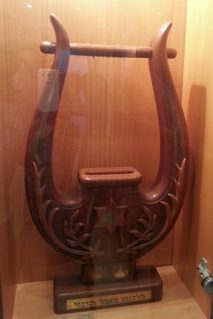
 This silver coin minted during the the Bar Kokhba revolt reads “To thefreedom of Jerusalem” on the obverse, which depicts trumpets, and “Yeartwo of the freedom of Israel” on the reverse, which depicts a lyre.
Bar Kokhba: False Messiah
About 60 years after the destruction of the SecondTemple in the FirstJewish-Roman War, Simon Bar Kokhba led a revolt against the Roman Empireand re-established Israel as an independent state. It lasted three years.
The leader of this Jewish War of Independence was born Simon Ben Kosiba, buthe changed his name to Bar Kokhba, which translates as ÔÇÿson of star." This nameis an obvious reference to Balaam’s Star Prophecy. In other words, heproclaimed himself the messiah of Israel.
Although he had many followers, he was proven to be a false messiah when hewas slain in 135 AD, just 100 years after Yeshua's (Jesus) death and resurrection.
This war split those who followed Yeshua from the rest of the Jewish community,since the believers in Yeshua knew that Bar Kokhba was not a true Messiah andtherefore refused to take part in the rebellion. They fled to the mountains,while those who followed Bar Kokhba perished fighting for a false messiah.
The Messianic Jewish Believers were therefore, perceived as traitors.
Although today, Jewish people know Bar Kokhba was a false messiah andrabbinical writers call him “Simon bar Kozeba” (son of lies/son of deception),the rift has grown and Jewish Believers in Yeshua now are perceived to befollowers of another religion.

A depiction of Yeshua reading Isaiah 61 in Nazareth synagogue:”Today this scripture is fulfilled in your hearing,” He said (Luke4:20).
Yeshua: Messiah King and Suffering Servant
"The scepter will not depart from Judah, nor the ruler's staff from between hisfeet, until he comes to whom it belongs and the obedience of the nations ishis." (Genesis 49:10)
The second half of the Star Prophecy says that "a scepter will rise out ofIsrael," echoing the prophecy found in Genesis 49:10.
Both clearly refer to the Messiah, who has already come as the Lamb ofGod in order to die as atonement for our sins (Isaiah 53) and will come againas the Lion of Judah to defeat the enemies of God and Israel, and torule the nations with justice and righteousness.
Psalm 2 refers to this Messiah, who will rule the nations, as the Son:
You are my Son; today I have become your Father. Ask of me, andI will make the nations your inheritance, the ends of the earth yourpossession. You will rule them with an iron scepter; you will dash themto pieces like pottery. (Psalm 2:7-9)
This psalm also contains a warning to revere God's Son, the Messiah, andpromises that those who take refuge in Him will be blessed:
Kiss the son, lest he be angry and you be destroyed in your way, for His
wrath can flare up in a moment. Blessed are all who take refuge in Him.(Psalm 2: 12)

Time is short until Yeshua’s second coming as the ruling, mightyKing Messiah and so many people have yet to take refuge in the trueMessiah of Israel.
The Messianic Bible Project needs Your Help in reaching the lost sheep of thehouse of Israel, and the world.
