Decree Chukat
Water from the Rock: Chukat (decree) is this week’s Torah (Bible) portion
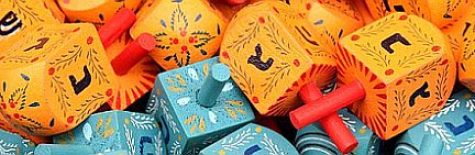 Hebrew ScriptureWelcome this week's Torah portion, which is called Chukat (Decree). Thisis the portion of the Hebrew Scripture that will be read in synagogues allaround the world this Shabbat (Saturday). Please join us as we study the Wordof God together. We know you will be blessed!CHUKAT (Statute or Decree) Numbers 19:1–22:1; Judges 11:1–33; Hebrews 9:11–28; John 3:10–21
“This is a requirement [chukat] of the law [Torah] that the Lord has commanded:Tell the Israelites to bring you a red heifer without defect or blemish and thathas never been under a yoke. ..it is for purification from sin.” (Numbers 19:2, 9)
In last week’s Parsha, which was called Korach, Korach challenged theleadership of Moses and the calling of Aaron to the priesthood, choosing tobelieve that all of Israel was holy.
God confirmed the leadership of Moses and Aaron with three events: theearth swallowed those who joined Korach’s mutiny; fire consumed the leaderswho presumed to offer incense; and Aaron’s staff miraculously blossomed.
In today’s Parsha, Moses is given the law of the Red Heifer, the ashesof which purify those who have sinned or become ritually impure (tamei)through contact with a dead body (tumat met) (Numbers 19: 17).
The Israelites also arrive in wilderness of Zin, after journeying for 40 yearsin the desert, and Moses strikes the rock to bring forth water for the thirstyIsraelites, instead of speaking to the rock as God had commanded him(Numbers 20).
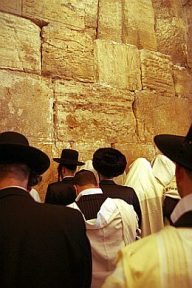 A rabbi helps a Jewish tourist at the Western(Wailing) Wall put on tefillin (the black box on thehead) in order to recite morning prayers. Theobligation to put on of tefillin arises from a literalinterpretation of Exodus 13: 9, 16; Deuteronomy6:8 and Deuteronomy 11:18. Verses of Scriptureare found in these handcrafted boxes.
The Law of Purification through a Red Heifer
God offers us no rational explanation for the divine ordinance ofpurification through the ashes of a red heifer.
It seems somewhat like parents saying to their children, "Do this because I toldyou to do it.”
Furthermore, there were stringent requirements for the Red Heifer (ParahAdumah). It was to be a young female cow (three to four years old) that hadnever given birth, had not been used for physical labor and was without defector blemish. Even two hairs of another color on the red heifer's body renderedit invalid for purification purposes.
Its ashes would be stored in a ceremonially clean place to be used as needed.
According to the Mishna (rabbinic commentary on the Torah), the ceremonialburning of a Red Heifer was enacted only nine times in history: once by Moses,once by Ezra, and seven times after Ezra.
It disappeared from Jewish life with the destruction of the Temple.

A red heifer
Inward Cleansing from Defilement and Sin
The traditional rabbinical commentary on this Parsha admits that the Red Heiferis a bit of a mystery. How can the ashes of a young red cow possiblycleanse a person from defilement?
When we look ahead to the Messiah's atoning sacrifice, however, weare better able to understand this portion of Scripture.
We know that Yeshua (Jesus) the Messiah was declared faultless and withoutblemish (1 Peter 2:22; Hebrews 4:15; Isaiah 53:12).
Through Him, we can be cleansed from all defilement and sin with a more perfect
sacrifice than the ashes of the red heifer, and the blood of bulls and goats(Hebrews 9: 11 – 12).
“The blood of goats and bulls and the ashes of a heifersprinkled on thosewho are ceremonially unclean sanctify them so that they are outwardly clean.“How much more, then, will the blood of Messiah, who through the eternal Spiritoffered Himself unblemished to God, cleanse our consciences from actsthat lead to death, so that we may serve the living God!” (Hebrew 9: 13 – 14)
We not only receive outward cleansing from the defilement of this world, butinward cleansing and eternal redemption.
“He did not enter by means of the blood of goats and calves; but he enteredthe Most Holy Place once for all by his own blood, having obtained eternalredemption.” (Hebrews 9: 12)

Chassidic rabbis
Very few Jewish people today understand the necessity of a blood sacrificefor the forgiveness of sins; therefore, it’s difficult for a Jewish person tounderstand what Yeshua has accomplished for us.
Blood sacrifice has always been used to cleanse us and atone for our sins; it isnot a manmade way, but God's way.
"For the life of a creature is in the blood, and I have given it to you to makeatonement for yourselves on the altar; it is the blood that makes atonementfor one's life." (Leviticus 17:11)
This aspect of God's requirements of man has been downplayed, if not completelyhidden by Rabbinical Judaism of today, since the Temple no longer exists, andwe can no longer fulfill this mitzvah (commandment).

A model of the Temple
Thirty-Eight Years of Silence
“In the first month the whole Israelite community arrived at the Desert of Zin,and they stayed at Kadesh.” (Numbers 20:1)
The Israelites arrive in the Desert of Zin in their 40th year in the wilderness.
In a previous Parsha (Shlach), the Israelites had been condemned to wanderfor 40 years in the wilderness until the entire generation died there.
Only two of the spies – Joshua and Caleb, would survive to enter the PromisedLand with the new generation of Israelites who had not known slavery.
So that leaves 38 years of silence.
Thirty-eight years of apparently uneventful, aimless, purposeless wanderinguntil they died. God was not pleased with most of those who came out ofEgypt because of their lack of faith.
And yet when we see the next generation preparing to enter the Promised Land,we may note that much spiritual growth took place in those 38 years.
It may seem that nothing of consequence happened – no progress worthyof mention in the Bible.
However, those 38 years transformed a beaten down generation of slaves intoparents who raised children fit to possess the Land and to live free of slaveryand the enslaving victim mentality of their parents.
 The Torah, which is painstakingly handwritten, contains the first five booksof the Hebrew Bible: Bereshit (Genesis), Shemot (Exodus), Vayikra(Leviticus), Bamidbar (Numbers), and Devarim (Deuteronomy).
Forgetting the Former Things
“Forgetting what is behind and straining toward what is ahead, I press ontoward the goal to win the prize for which God has called me heavenward inChrist Jesus [Yeshua the Messiah].” (Philippians 3: 13 -14)
Despite being on the brink of entering the Promised Land, when theIsraelites arrived in the Desert of Zin, they grumbled and opposed Mosesbecause it seemed like a hostile environment. Slavery in Egypt looked better.
“Why did you bring us up out of Egypt to this terrible place? It has no grainor figs, grapevines or pomegranates. And there is no water to drink!"(Numbers 20:5)
The prevailing sin of the Israelites was their inability to keep a forward,hopeful, trusting, faith-filled focus. Every time a challenge presented itself,they looked back to the past with rose-colored glasses.
We all have a past to look back at. When God brings us out of something, wemust resist the temptation to want to go back to it when things get hard.
 An illustration depicting the priests ministering to the Lord in theTemple, with one lighting the TempleMenorah.
In response to the Israelites’ complaints, Moses and Aaron left the assemblyand fell on their faces before the Lord in the Tent of Meeting to plead for thepeople, and “the glory of the Lord appeared to them. (Numbers 20:6)“
The Hebrew word for glory is kavod, which comes from the word kaved,meaning weighty, heavy or burdensome.
The glory of the Lord is a weighty, discernible presence; for example, whenthe glory (kavod) of God filled the Tabernacle, Moses could not continue tominister (Exodus 40: 34 – 35).
The example of Moses and Aaron is wonderful to remember when we findpeople grumbling and opposing us, especially when we are in a position ofleadership. Rather than striving to reason with negative, complaining people,we too should turn to the Lord in prayer. He will not disappoint us.
 Moses Smiteth the Rock in the Desert, by James Tissot
Smiting the Rock
“Speak to that rock before their eyes and it will pour out its water. You willbring water out of the rock for the community so they and their livestock candrink.” (Numbers 20: 7)
God responded kindly to the prayers of Moses and Aaron and the need ofthe Israelites for water, and told Moses to take his staff and speak to the rockso that water would miraculously pour out.
Even though Moses did seek God when the Israelites grumbled, his responsewas less than perfect.
He was frustrated with the Israelites, and called them rebels. Instead ofspeaking to the rock to bring forth water as God commanded, he struck it.
When he did that, he misrepresented God as angry. Nevertheless, out flowedthe life-giving water.
But there were consequences. Moses, who was God’s appointed representativeand leader of the Israelites, would not lead the children of Israel into thePromised Land as he longed to do.
To misrepresent God as angry when He is showing kindness is a serious sin withserious consequences.

Zion (Jerusalem): The modern and Old City of Jerusalem, as well as theTempleMount
Looking to the Rock
“So this is what the Sovereign Lord says: ‘See, I lay a stone in Zion, a testedstone, a precious cornerstone for a sure foundation; the one who trusts willnever be dismayed.” (Isaiah 28:16)
In the Brit Chadashah (New Testament), Yeshua is called the ÔÇÿliving Stone.'
"As you come to him, the living Stone – rejected by men but chosen by Godand precious to him." (1 Peter 2:4-5)
He is the living Rock from which surges forth water that satisfies our soul.When Yeshua (Jesus) met the Samaritan woman at the well, He said to her:"Everyone who drinks this water will be thirsty again, but whoever drinks thewater I give him will never thirst. Indeed the water I give him will become inhim a spring of water welling up to eternal life." (John 4:13-14)
It was to this Samaritan woman that Yeshua openly declared himself theMessiah who brings salvation to mankind.
 A woman in front of a 1st century well in Israel
In John 7, Yeshua also made another reference to living water on the last day ofthe Feast of Sukkot (Tabernacles).
"’If anyone is thirsty, let him come to me and drink. Whoever believes in Me,as the Scripture has said, streams of living water will flow from within him.’By this He meant the Spirit, whom those who believed in Him were later toreceive." (John 7:37-39)
This is very much in keeping with the end-time prophecy we find in Isaiah:
"For I will pour water on the thirsty land, and streams on the dry ground;I will pour out my Spirit on your offspring, and my blessing on yourdescendants." (Isaiah 44:3)
Today, in partial fulfillment of this prophecy, the desert is truly blooming asa rose, exactly as God promised.
Because of His faithfulness, we can rest assured that God will also fulfill Hispromise to pour out His Spirit on the Jewish People. Let us pray that the willof our Father in Heaven will be done in the Holy Land and people of Israel.
Life without Yeshua’s living water is a dry and thirsty existence.
There’s simply nothing better than living a life satisfied and refreshed bythe Spirit of God.
