In The Wilderness Bamidbar
Does God ordain suffering? Bamidbar (in the wilderness) is this week’s Torah portion
 Torah scrollShabbat Shalom John,
Welcome to our Torah study on this week's portion of Scripture, which iscalled Bamidbar (In the Wilderness).
Please read along and enjoy with us this Torah Portion that will be read insynagogues around the world.
PARSHA BAMIDBAR (In the Wilderness)
Numbers 1:1-4:20; Hosea 2:1- 22; Romans 9:22- 33
Last week, in Parsha Behar-Bechukotai (On the Mount-By My Decrees),we read that the agricultural land in Israel was to have a rest every sevenyears. We also read about the Jubilee Year, which followed seven cycles ofseven years, when the Israelites were released of their debts and could returnto their inherited lands.
 Torah procession at the Western (Wailing) Wall: To pay respect to the Wordof God, it’s traditional to touch the Torah with a prayer book or the corner ofa tallit (prayer shawl) .
This week's Parsha studies the opening chapters of the Book of Numbers. InHebrew, the Book of Numbers is called Bamidbar, which means ÔÇÿin thewilderness or desert.'
The Hebrew name for the Book of Numbers comes from the fifth word of theopening line of Numbers: "The Lord spoke to Moses in the Tent of Meetingin the Desert [Bamidbar] of Sinai…." (Numbers 1:1)
The Hebrew word midbar (desert) comes from the same root as m'daber,which means to speak.
It’s often during the wilderness times of our lives that God speaks toour hearts.
 JudeanMountain landscape near the Dead Sea: just over 15 percent ofIsrael is arable land.
El Shaddai: What's in a Name?
"Take a census of the whole Israelite community by their clans and families,listing every man by name." (Numbers 1:2)
In Numbers 1, Moshe (Moses) is commanded to take a census of all adultmales. They are numbered according to family, by their father's houses,according to name.
In Hebrew, names carried significant meaning; for example, Elitzur(Numbers1:5) means My God (Eli)is a rock (Tzur).
Of the twenty-four proper names here given, nine contain the Divine name,El (God), three the name Tzur (Rock), which is frequently used for God, asin Tzur Yisrael (Rock of Israel) or Rock of Ages.
 Reading the Torah in the men’s section of Wilson‘s Arch at the Western(Wailing) Wall in Jerusalem
The name Shaddai also appears three times in the names listed.
Shaddai is a very interesting word study. The compound El Shaddai isusually translated ÔÇÿGod Almighty' in English Bibles, but this does not begin todo justice to the meaning of this name of God.
“When Abram was ninety-nine years old, the Lord appeared to him and said,‘I am God Almighty; walk before me and be blameless.” (Genesis 17:1)
Shaddai is derived from a Hebrew root shadad, which means to overpower.Interestingly enough, this root also can mean a demonic power. Therefore,El Shaddai also means that God overpowers or prevails against all demonicpowers.
"Wail, for the day of the Lord is near; it will come like destruction from theAlmighty [Shaddai]." (Isaiah 13:6)
 An open scroll of Torah
Shaddai is also derived from the Hebrew root shad, which means breast. Thisreveals the maternal, merciful nature of God.
If we read the Word carefully, we will see this aspect of God's nature as
Shaddai – the woman's breast – the source of nourishment and comfort toher children.
"…because of the Almighty [Shaddai], who blesses you with blessings of theskies above, blessings of the deep springs below, blessings of the breast[shadim] and womb." (Genesis 49:25)
We know from the Book of Genesis, that we were created in God’s image asmale and female. As strange as it may seem to us then, God is not only aFather, He is also a mother.
In Exodus, when Moses asked God for His true name, He answered, "EhyeAsher Ehye," which though commonly translated as ÔÇÿI am who I am', ismore accurately translated as "I will be what I will be" (Exodus 3:14).
There are so many facets to the name, character, and nature of Elohim(God). He capable of being to us whatever we need at any given moment:Rock, Comforter, Provider, God who is there, ….
“The name of the Lord is a strong tower; the righteous run to it and are safe.”(Proverbs 18:10)
 Photo of the Milky Way: Today’s Parsha and Haftarah share the themes ofwilderness and numbering Israel. In the Parsha, Moses takes a census, andin the Haftarah, God promises that “the Israelites will be like the sand on theseashore, which cannot be measured or counted” (Hosea 1:10, which isHosea 2:1 in the Hebrew text). In Genesis 15:5, God likens the numbers ofIsrael to the stars.
Haftarah (Prophetic Portion): Can Suffering be Ordained by God?
"Therefore I am now going to allure her; I will lead her into the wildernessand speak tenderly to her. There I will give her back her vineyards, and willmake the Valley of Achor a door of hope. There she will respond as in thedays of her youth, as in the day she came up out of Egypt. "In that day,"declares the Lord, "you will call me ÔÇÿmy husband.'" (Hosea 2: 14-16)
The Haftarah (prophetic portion) promises that God will allure Israel, bringher back to the Land, and that the relationship between God and Israelwould be, once again, like a healthy marriage.
To understand the themes of marriage, betrayal and redemption in Hosea, wemust understand Hosea's situation.
God instructed him to take a harlot for a wife-a woman who was seeminglydestined to be unfaithful to him. The rabbis, in fact, believe that Hosea'sresulting domestic tragedy was actually ordained by God.
Through his personal ordeal and the agonizing pain of loving a woman whowould turn to other men, Hosea came to understand, at a very deep level,through intense personal experience, how God feels about Israel, Hisunfaithful Bride.
"Go, show your love to your wife again, though she is loved by another andis an adulteress. Love her as the Lord loves the Israelites, though they turnto other gods and love the sacred raisin cakes." (Hosea 3:1)
 A Jewish bride and groom walk along the Israeli beach together for the firsttime as a married couple.
God might take us through periods of suffering-even anguish of heart,soul, and body-not only to identify with God's pain over sin, but also sothat we may identify with the pain of others.
This is a hard concept to understand-that God may actually ordain personalsuffering.
Still, how can we truly minister to a suffering, lost, broken, despairing,hopeless, confused, depressed, sick, poor, trapped, and hurting humanityunless we have also experienced these same painful states?
Sometimes we are burdened beyond measure, beyond our strength, to thepoint that we despise life itself.
But our God, who comforts us in all our tribulations, gives us His comfort sothat we may be able to comfort those who are also in trouble with the samecomfort that we have received from God.
"Praise be to the God and Father of our Lord Jesus Christ, the Father ofcompassion and the God of all comfort, who comforts us in all our troubles,so that we can comfort those in any trouble with the comfort we ourselvesreceive from God." (2 Corinthians 1:4)
 Young Jewish man seeking the Lord at the Holy Western (Wailing) Wall
Finding Strength in the Storm
“I will heal their waywardness and love them freely, for my anger has turnedaway from them. I will be like the dew to Israel; he will blossom like alily.” (Hosea 14: 4-5)
Are you burdened and grieved beyond your ability to bear it by some kindof domestic tragedy, like Hosea's – an adulterous spouse?
Do you struggle with despair over a situation in your home or family that neverseems to be resolved?
Sometimes we feel like we live in a never-ending storm, and we might evenbegin to doubt God's love for us.
The Bible records that the disciples of Yeshua (Jesus) were once in such astorm – a storm of hurricane proportions. Their boat was filling with water,and they were sinking fast. They thought they'd drown for sure!
 Yeshua (Jesus) in the Storm on the Sea of Galilee, by Pieter Brueghel
And where was Yeshua (Jesus) during all of this? Asleep on a cushion inthe stern of the boat! In their distress, the disciples cried out, "Master,don't You care that we are perishing?" (Mark 4:37-38)
What was Yeshua's answer? Faith! Believe and do not doubt (Mark 4: 39-40).
There are times when we feel like we're drowning, and it seems like God isasleep. We wonder if He even cares anymore. Why does He allow our stormsto go on and on?
We have prayed and fasted and prayed some more, but the wind and wavescontinue to beat against our tiny, sinking boat. The storm rages on.
Through this message in the Book of Hosea, our storm-tossed soul mayfind rest.
Hosea was deeply unhappy in his marriage. He had seemingly ÔÇÿwasted' hislove on Gomer, a promiscuous, adulterous woman. Nevertheless, this marriagesymbolized God's experience with the nation of Israel.
Like Hosea, God is a loving, faithful husband who was abandoned and betrayedby a wife. God chose Israel and delivered her from Egypt to be His ownspecialsegulah (treasure).
The Jewish people suffered as slaves in Egypt, and He delivered them. Heshowered them with blessings, lavished them with love, gave them their ownhome-a land flowing with milk and honey (the wedding gift), and made theminto a mighty people.
And yet, in utter ingratitude, they adopted the customs and worship of theidolatrous Canaanites and forsook the one true God, Creator of heaven and earth.
 A Jewish bride takes her turn to drink from the Kiddish(sanctification) Cup during the wedding ceremony.
The name Gomer comes from the Hebrew root gamar, which means tocomplete, to perfect and to finish.
After Gomer realized that the gifts of her suitors could not compare with beinga wife and a mother, God sent Hosea to redeem her from a slave trader.
Just like Gomer, but for the grace of God, we would all be finished. Becauseof His great mercy, He redeems us and gives us a hope and a future. We cantrust Him to perfect that which concerns us (Philippians 1:6).
"The Lord will fulfill [his purpose] for me; your love, O Lord, enduresforever-do not abandon the works of your hands." (Psalm 138:8)
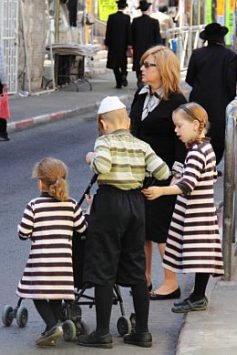 An Israeli mother carries her child on her hip at theWestern (Wailing) Wall in Jerusalem.
Just like Hosea as a husband would not give up on Gomer, God will notgive up on His People.
And just like a mother, El Shaddai loving draws His children to Him.
Look at the beautiful, gentle, merciful, long-suffering, ever faithful imageryreflective of motherhood in the following passages:
It was I who taught Ephraim to walk, taking them by the arms; butthey did not realize it was I who healed them. I led them with cordsof human kindness, with ties of love. To them I was like one wholifts a little child to the cheek, and I bent down to feed them.(Hosea 11:3-4)
How can I give you up, Ephraim? How can I hand you over,Israel? … My heart is changed within me; all my compassion isaroused. (Hosea 11:8)
In fulfillment of Bible prophecy, God brought the Jewish People back tothe wilderness that was the Land of Israel. He has made that wildernessblossom, and He is still alluring and speaking to His people just like Hosea prophesied.